Tanning mistakes to avoid
Does sunburn turn into a tan, and does a tan protect you?
In short
- Sunburn doesn’t turn into a tan: it’s a burn, and peeling skin takes some of your colour with it.
- Even a well-established tan offers only weak protection, the equivalent of SPF 2 to 4: it’s no substitute for sun cream.
- The best approach: tan in small steps, with the right sun protection and an after sun every evening.
‘A good sunburn at the start of the season, and you’re protected for the rest of the summer.’ You hear it on the beach every year. The idea is that burnt skin ‘toughens up’ and builds a kind of natural sun protection for later. But does sunburn really turn into a tan? Does a tan protect you from the sun, and by how much? Here’s what the studies say, and how to get a lovely tan without burning first.
What is sunburn? Symptoms and severity
Sunburn is a burn to the skin caused by too much sun exposure, or more precisely by UV rays. UVB rays are mainly responsible for sunburn, while UVA rays penetrate deeper and speed up skin ageing. The first signs appear within hours of exposure: the skin turns red, hot and painful.
How serious sunburn is depends on how deep the burn goes. Like a first-degree burn, sunburn without blisters affects the top layer of the skin. When blisters appear, the burn goes deeper and you need medical advice (see below).
Doctors call this redness erythema. It doesn’t depend only on how long you spend in the sun: the time of day, the season, reflection from water or sand and, above all, your skin type all play a big part. Fair skin fresh out of winter goes red much faster than olive skin that’s already tanned.
Does sunburn turn into a tan?
This is the heart of the myth, and it’s where it goes wrong. Redness and a tan are two different skin reactions. A tan comes from melanin, a pigment your skin produces when it’s exposed to UV; it appears two or three days after exposure, the time it takes specialised cells to produce this pigment (we explain it in our article on tyrosine and tanning). Redness, on the other hand, is inflammation: the skin reacting to damage.
When sunburn seems to ‘turn into a tan’, it’s simply that both things happened at the same time: the redness fades and reveals the tan that formed underneath. But the burn added nothing to the colour. Worse still, a few days later, burnt skin peels. The damaged top layer comes away, and some of the colour goes with the dead skin. So sunburn makes you lose tan rather than gain it.
Does a tan protect you from the sun?
A little, but much less than most people think. Researchers measure this protection the same way as the SPF of a sun cream: how many times more sun it takes for the skin to go red.
- A team at St John’s Institute of Dermatology in London exposed the skin of twelve volunteers (fair skin and olive skin) five days a week for two weeks, with doses deliberately kept below the sunburn threshold. The resulting tan gave protection of a factor of about 2, against both redness and damage to the DNA of skin cells (Sheehan et al., Journal of Investigative Dermatology, 2002).
- A review published in 2020 in the Journal of Cosmetic Science puts the protection provided by a tan at a factor of around 2 to 4 (Young, 2020).
A factor of 2 roughly means it takes twice as much sun to go red. That’s a long way from an SPF 30 or 50 sun cream. In other words, even with a tan you can get sunburnt, and sun protection is still essential all summer.
These studies also show something important: this small amount of protection comes without any sunburn at all. The volunteers tanned with short, repeated exposures, never to the point of burning. Burning isn’t the price you pay for a tan: it’s an accident to avoid.
Why an early-season sunburn is a bad idea
- It damages your skin. A large analysis of 51 study populations showed that the risk of melanoma, the most serious form of skin cancer, rises with the number of sunburns, and not just those in childhood: at every age (Dennis et al., Annals of Epidemiology, 2008). For the health of your skin, every unprotected sun exposure that ends in a burn counts, and sunburns add up.
- It wastes time. After sunburn, you have to wait for your skin to heal before going back in the sun. Those are days of tanning lost.
- It spoils your tan. Peeling skin leaves pale patches and an uneven tan that’s hard to fix.
- It doesn’t protect you later on. The tan you get is only worth the equivalent of SPF 2 to 4, sunburn or not.
How to tan without burning
The secret to a lovely, long-lasting tan is building it up gradually: short exposures at first, lengthened little by little as your tan develops. That’s true in the sun and on a sunbed alike, and it’s how your colour becomes deep and even. Our rules for a successful tan explain the method in detail.
In the sun: protection designed for the first few days
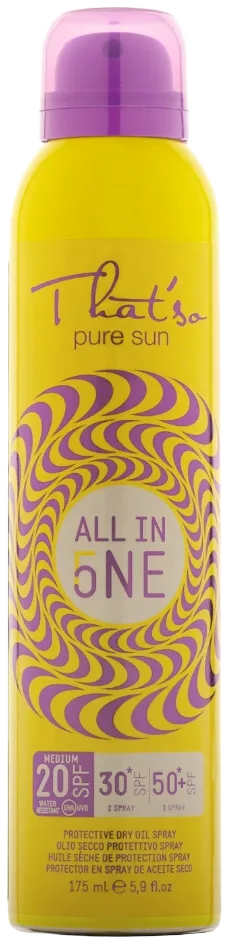
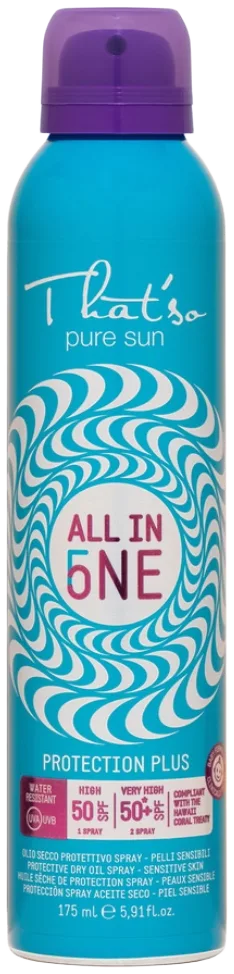
For your first time in the sun each season, when your skin has no tan yet, That'so Pure Sun SPF 20/30/50 is our first recommendation. It’s a build-up sun cream spray: one spray gives SPF 20, two sprays SPF 30, three sprays SPF 50+. You choose your protection to suit your skin and the time of day, with just one bottle. And it doesn’t only protect: its tyrosine-based active ingredients support your tan. For very fair skin or intense sun, the range also offers Pure Sun SPF 50/50+.
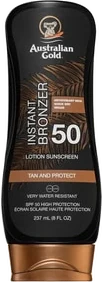
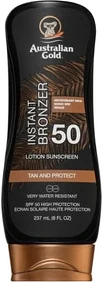
For swimming and sport, choose the Australian Gold SPF 50 sun lotion with bronzers: it’s water resistant for 80 minutes and gives you a lovely sun-kissed glow straight away. Whatever you use, apply your sun cream before going out, reapply every two hours and after every swim, and avoid the hottest part of the day. To protect yourself properly from the sun, add a hat and sunglasses.
On a sunbed: short sessions and the right accelerator
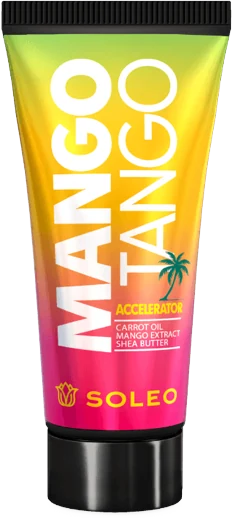
For a sunbed tan, your tanning salon will build a programme suited to your skin type, starting with short sessions. Always stick to the exposure time recommended by your tanning salon to avoid burning. For your first sessions and for sensitive skin, choose a bronzer-free tanning accelerator with no tingle, such as Soleo Mango Tango, with mango extract and carrot oil. You’ll find the full selection in our tanning accelerators category. Good to know: a tanning accelerator contains no SPF, so it won’t protect you from the sun outdoors.
Every evening: an after sun
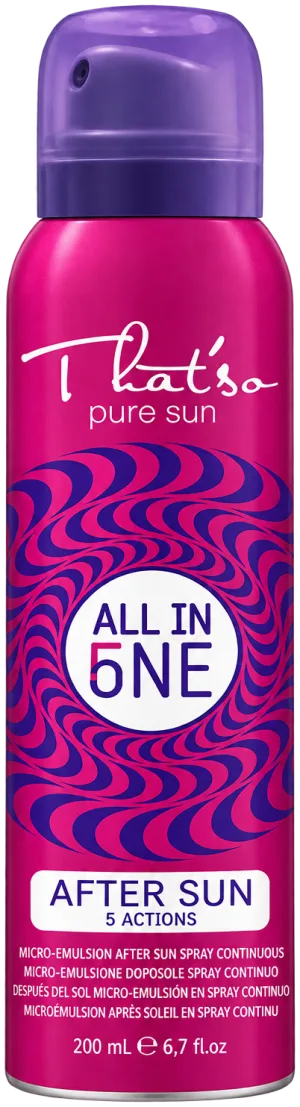
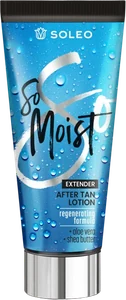
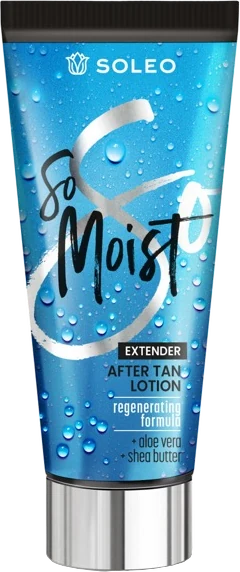
The sun dries out your skin. An after sun rehydrates and soothes it, and helps your tan last. That'so All In One After Sun is a spray that soothes redness after a lot of sun, hydrates with aloe vera and cools with menthol. Soleo So Moist, a lotion with aloe vera and shea butter, deeply hydrates and extends your tan day after day. You’ll find everything in our after-tan care and tan extenders category.
What to do for sunburn: how to soothe your skin
If you do get sunburnt, here’s how to relieve it, based on first aid advice from Health Canada:
- get out of the sun straight away, and keep the burnt areas covered over the next few days;
- cool your skin with a lukewarm shower or lukewarm compresses, several times a day, without rubbing;
- apply a soothing aloe vera gel, and avoid rich, greasy creams that trap the heat;
- drink plenty of water for two or three days;
- don’t pop any blisters.
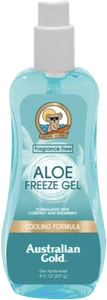
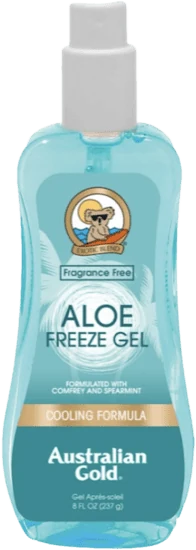
Our tip for soothing sunburn: Aloe Freeze Gel by Australian Gold. This aloe vera after sun gel hydrates, soothes and cools skin that’s had a little too much sun. Spearmint gives hot, itchy skin an instant cooling feeling, while green tea, linden, vitamin E and provitamin B5 take care of it. Tip: keep it in the fridge for an even more refreshing feel.
See a doctor quickly if the sunburn blisters or is very painful, or if you have a fever, chills, nausea, a headache, dizziness or a swollen face. And let your skin heal completely before going back in the sun.
Frequently asked questions
Can you turn sunburn into a tan?
No: redness and a tan are two different skin reactions. The tan that shows up after sunburn would have developed anyway with gentler exposure, and peeling skin takes some of it away. To keep as much colour as possible, moisturise generously with an after sun and wait until your skin has healed before going back in the sun.
Can you get sunburnt if you already have a tan?
Yes. A tan does protect you, but only a little: the equivalent of SPF 2 to 4, according to studies. Well-tanned skin can still burn after long exposure or in strong sun. Keep using a sun cream, such as That'so Pure Sun SPF 20/30/50, with one or two sprays once your tan has built up.
Can you burn on a sunbed?
Yes, if the session is too long for your skin type or too close to the previous one. That’s why your salon adapts the session time to your skin and leaves at least 48 hours between two sessions. Always stick to the exposure time recommended by your tanning salon to avoid burning.
Do you need to burn to get a good tan?
No, quite the opposite. Studies show that skin tans with short, repeated exposures, without ever burning. Sunburn makes your skin peel, leaves your tan patchy and forces you to take a break. Building up gradually gives you a better-looking tan that lasts longer.
How do you keep a good tan?
Moisturise your skin every day with an after sun that extends your tan, shower in lukewarm water and exfoliate less often. All our tips are in our article on how to keep your tan.
In short
An early-season sunburn won’t protect you for the summer: it’s a burn that makes your skin peel and lose colour, and a tan itself is only worth the equivalent of SPF 2 to 4. For a great tan, build it up step by step, protect yourself in the sun with That'so Pure Sun SPF 20/30/50, prepare for your sessions with the right tanning accelerator and finish every day with an after sun. And if you’re already sunburnt, Aloe Freeze Gel cools and soothes your skin.
Photo: hacer arslan on Unsplash