Getting a great tan
Tyrosine and tanning: benefits for your skin, foods and melanin
In short
- Tyrosine is an amino acid: the raw material your skin uses to make melanin, the pigment behind your tan.
- A tan appears 2 or 3 days after exposure: the time it takes your skin to make its melanin.
- It’s found in protein-rich foods, in tanning accelerators and in the Your Sun Fizz supplement.
Why do some people tan quickly and others hardly at all? Why does a tan only show two or three days after time in the sun? And what are the real benefits of tyrosine, the star ingredient in tanning accelerators? It all starts with a pigment, melanin, and an amino acid, tyrosine. Here’s how your skin builds a tan, and how to help it tan faster and more beautifully, on a sunbed or in the sun.
Melanin, the pigment behind your tan
Skin colour comes from melanin, a pigment made by specialised cells called melanocytes, found at the base of the epidermis. Under UV light, melanocytes produce more melanin and pass it on to the neighbouring cells of the epidermis: the skin darkens, and that’s your tan.
There are two main types of melanin:
- eumelanin, dark brown to black, which gives a deep tan and protects the skin better;
- pheomelanin, yellow to red, the main type in fair skin and redheads, which tans little and protects less.
The balance between the two depends on your skin type, in other words the skin you were born with. Olive skin, rich in eumelanin, tans quickly and deeply. Fair skin, rich in pheomelanin, tans slowly and burns easily: it needs to build up a tan in small steps.
What is tyrosine? The amino acid melanin is made from
Tyrosine is an amino acid, one of the building blocks of proteins. It’s a non-essential amino acid: the body makes it from another amino acid, phenylalanine, and also gets it from protein-rich foods.
Melanocytes make melanin from tyrosine. An enzyme called tyrosinase converts tyrosine into DOPA, then into dopaquinone, the starting point for both types of melanin. Tyrosinase contains copper: that’s why copper is listed among the active ingredients of some accelerators. UV exposure stimulates this whole chain: melanin production increases, and the skin colours accordingly.
Tyrosine has other roles in the body too: it’s also the building block of neurotransmitters such as dopamine and noradrenaline, and of thyroid hormones. But for your skin, what counts is its role in making melanin.
Tyrosine: what are the benefits for skin and tanning?
For the skin, the first benefit of tyrosine is its role in making melanin. Without it, there’s no pigment, so no tan. On skin exposed to UV rays, it plays a part in the skin’s natural pigmentation and natural tan.
In skincare, manufacturers add it to tanning products to get the most out of each session: applied just before exposure, it helps stimulate melanin production at the very moment UV light triggers it. Combined with moisturising and antioxidant ingredients, it gives a more even colour and helps your tan last longer. That’s why you’ll find it in most tanning accelerators, also known as tan activators.
Why your tan doesn’t show straight away
A tan develops in two stages:
- Immediate pigmentation. Straight after exposure, UVA rays oxidise the melanin already in your skin: it takes on a greyish to brown tint that fades within a few hours.
- Delayed tanning. Melanocytes produce new melanin. This tan appears two to three days after exposure, and it’s the one that lasts.
In practice, a tan builds up session after session. Staying under UV light for longer doesn’t give you a faster tan, only a greater risk of burning. Always stick to the exposure time recommended by your tanning salon to avoid burning.
Tyrosine in lotions: what tanning accelerators do
A tanning accelerator, also known as a tan activator, is applied just before your session. Tyrosine is its key ingredient: applied to the skin during exposure, it makes the building block of melanin available to your cells just as UV light switches on production. Many formulas also use acetyl tyrosine, a more soluble form of tyrosine.
But there’s more to an accelerator than tyrosine. UV light dries the skin, and dry skin tans less evenly and peels faster. So accelerators combine tyrosine with moisturising and nourishing ingredients: aloe vera, plant oils, cocoa butter, collagen, hyaluronic acid and antioxidant vitamin E, which helps the skin deal with the oxidative stress caused by UV light.
A few examples, all bronzer-free:
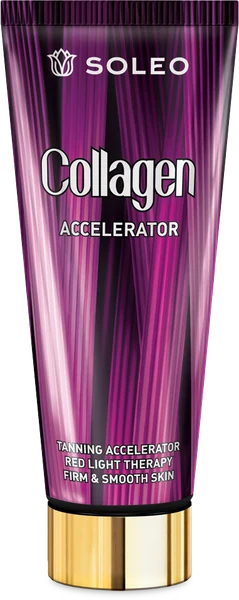
- Soleo Collagen Accelerator, with tyrosine, collagen and Tahitian monoi;
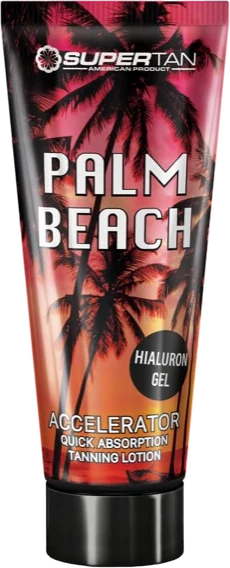
- Supertan Palm Beach, a gel with tyrosine and hyaluronic acid;
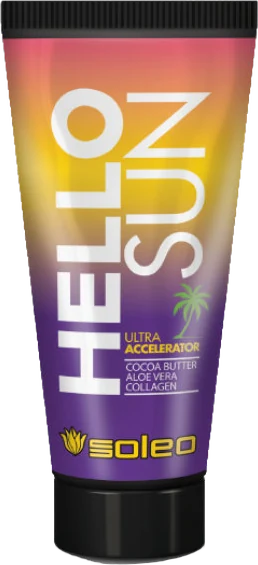
- Soleo Hello Sun, an ultra accelerator with cocoa butter and collagen;
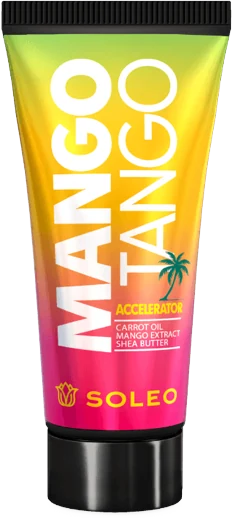
- Soleo Mango Tango, from the Soleo Basic collection, with mango extract and carrot seed oil, and no tingle.
You’ll find the full selection in our tanning accelerators category, along with the whole Soleo Basic collection: fourteen accelerators, with or without bronzers, all at the same low price.
With or without bronzers?
A tyrosine accelerator works with your own melanin: the colour you get comes from your skin alone. That’s what we recommend for your first sessions and for fair skin.
Accelerators with bronzers add DHA or erythrulose. These ingredients don’t work through melanin: they colour the surface of the skin. They suit olive or darker skin (Mediterranean or African skin types) and skin that’s already deeply tanned, because bronzers don’t create colour, they transform it: when your melanin is working hard, a tan can turn dull, and a touch of DHA makes it more coppery, more radiant and more natural.
How to use a tyrosine accelerator
- Apply an even layer all over your body just before your session, then wash your hands.
- An accelerator contains no SPF: it isn’t a sun cream.
- Build up the length of your sessions gradually, especially if you have fair skin.
- After your session, moisturise with an after-tan moisturiser: supple skin holds its tan for longer.
Tyrosine supplements: the Your Sun range
Tyrosine can also be taken from the inside, as a supplement, alongside beta-carotene, vitamins and minerals. Our Your Sun supplements support your tan before and during the season, in the sun or on a sunbed, in four formats: to drink, to dissolve or to chew.
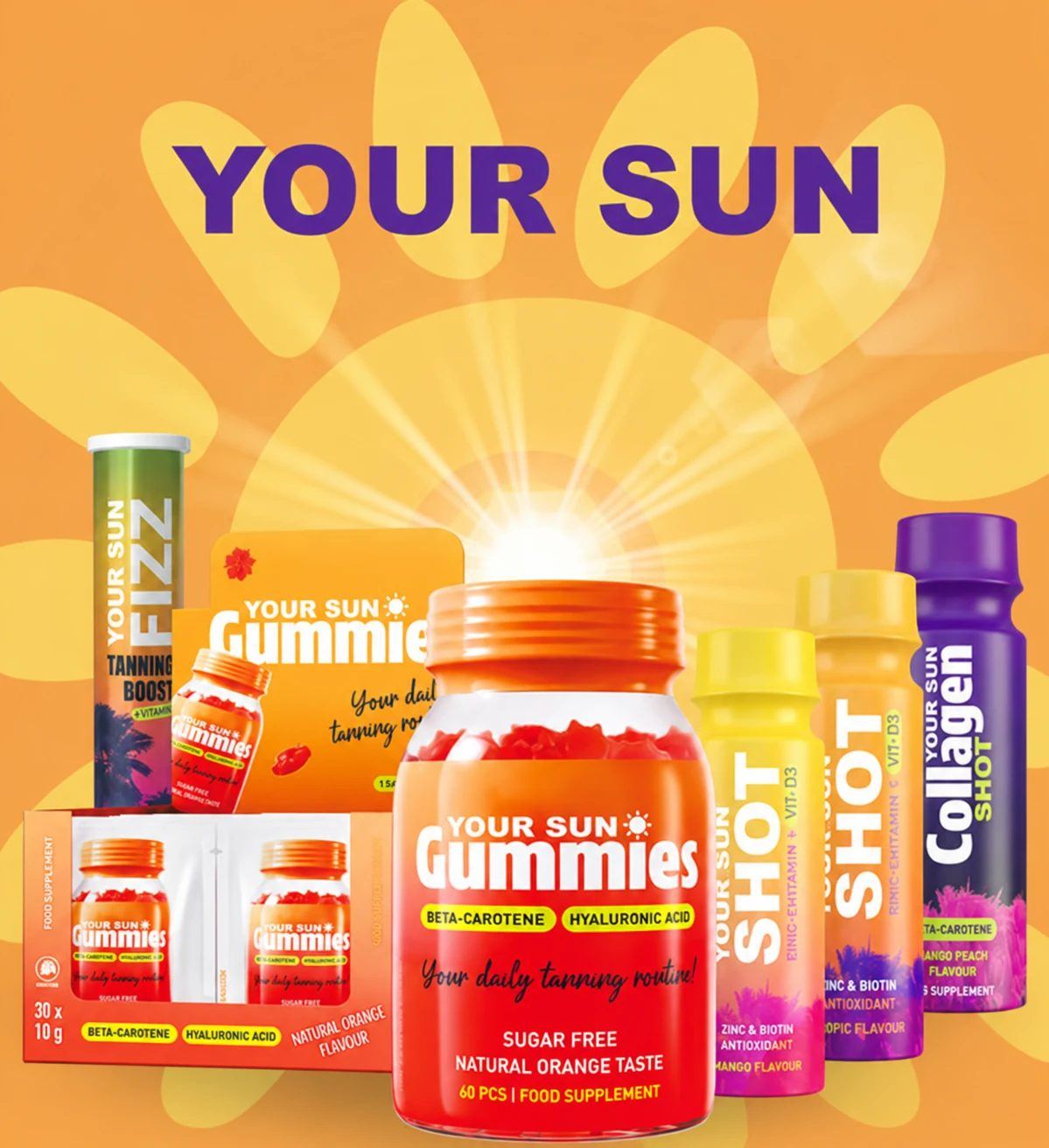
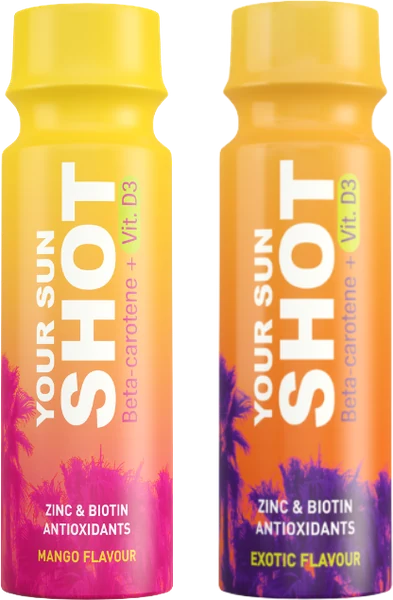
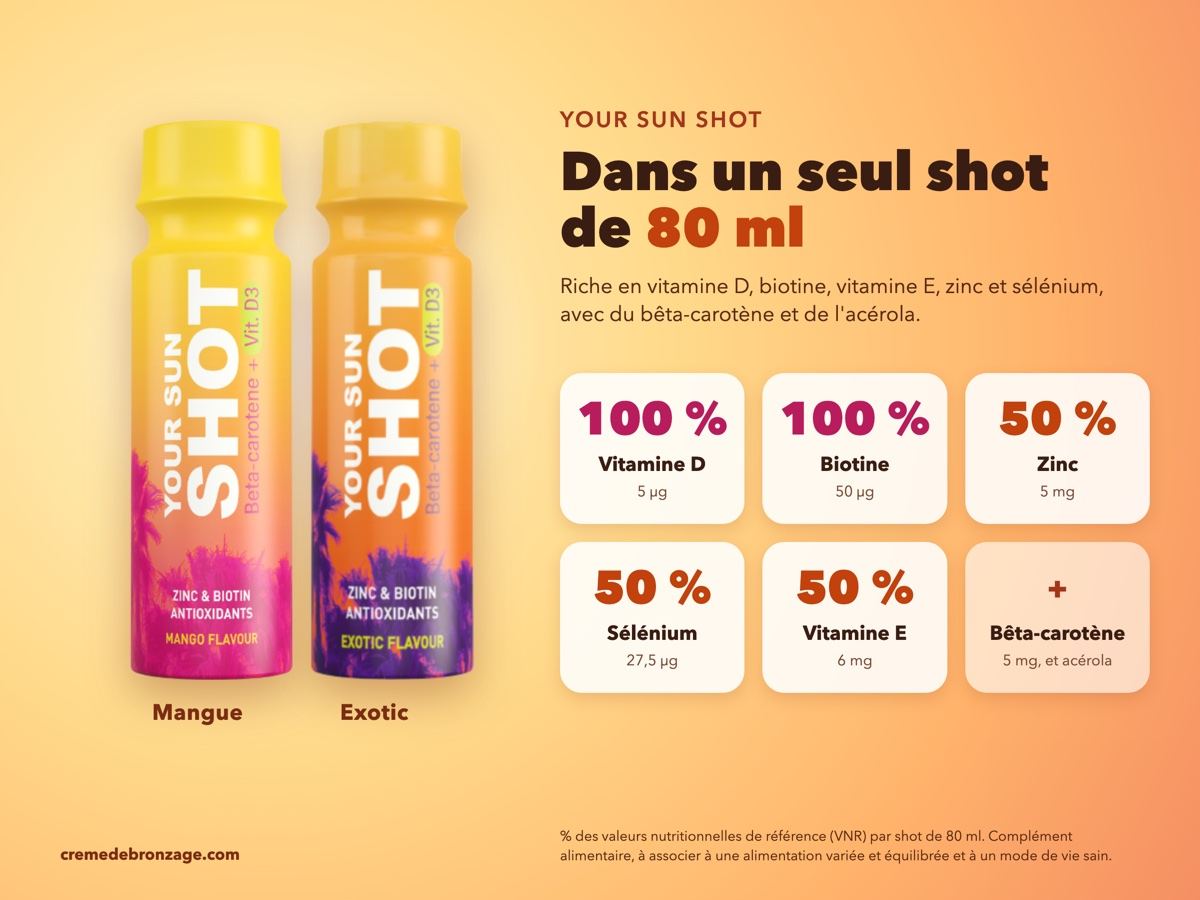
- Your Sun Shot, in two flavours, Your Sun Shot Mangue and Your Sun Shot Exotic: an 80ml fruit juice enriched with beta-carotene and acerola. A single shot provides 100% of the reference intake of vitamin D and biotin, and 50% of zinc, selenium and vitamin E. Zinc and biotin contribute to the maintenance of normal skin.
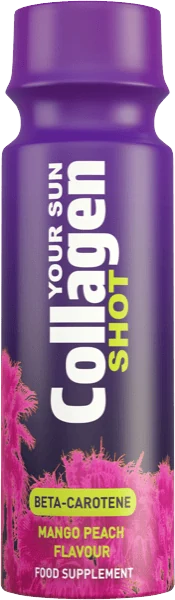
- Your Sun Collagen Shot: the same base with a mango and peach flavour, enriched with collagen. Its vitamin C contributes to normal collagen formation for the normal function of skin.
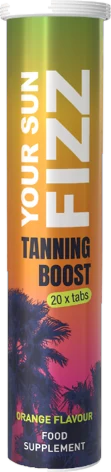
- Your Sun Fizz: 20 orange-flavoured effervescent tablets, one a day in a glass of cold water. It’s the only one in the range with L-tyrosine, combined with beta-carotene, hyaluronic acid, vitamins A, B2, C and E, biotin and copper, which contributes to normal skin pigmentation. Almost as complete as the shots, it has one big advantage: its weight. Twenty tablets in a light tube, nothing liquid to carry: it’s the ideal format for flying, when every gram of luggage counts.
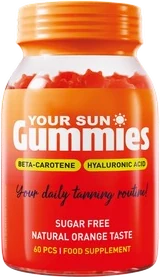
- Your Sun Gummies: sugar-free gummies with a natural orange flavour, two a day, with beta-carotene (vitamin A) and hyaluronic acid, plus vitamins C, D and E. Vitamin A contributes to the maintenance of normal skin. The simplest format if you never want to forget your course, in a pot of 60 gummies or in sachets of 2 to slip into your bag.
Our advice: a Your Sun Shot, with or without collagen, every two to three days for the two to three weeks before your sunny holiday or your course of tanning sessions. When you set off, pop a tube of Your Sun Fizz in your suitcase: light and compact, it carries your course on for twenty days while you’re away. If you’d rather chew than drink, Your Sun Gummies are taken every day, at home or away.
Don’t exceed the recommended daily dose: these supplements come on top of a varied diet and your sun protection. If you’re on medication (thyroid treatment, antidepressants) or pregnant, ask your doctor before starting a course.
Beta-carotene is also a common ingredient in tanning lotions: it enhances the colour of your tan. You’ll find it, for example, in Supertan Pineapple & Mango, a triple bronzer with DHA, erythrulose and beta-carotene, or in Soleo Bronze Satisfaction, whose blend of ten bronzing agents combines it with melanin, henna and caramel.
Frequently asked questions
Which foods are rich in tyrosine?
Protein-rich foods: dairy products, meat, fish, eggs, soya and pulses, almonds and seeds. For a concentrated course during the season, Your Sun Fizz provides L-tyrosine in an effervescent tablet.
Does tyrosine make you tan without the sun?
Tyrosine works with UV light: it’s used to make melanin, and it’s exposure that triggers production. For a tanned look without any sun exposure, choose a self tan.
Tyrosine or acetyl tyrosine: what’s the difference?
Acetyl tyrosine is a more soluble form of tyrosine, used in many accelerators: it too supplies the skin with the building block of melanin.
Tyrosine: are there any risks or side effects?
In skincare, tyrosine is a common ingredient in tanning accelerators. The real risk in tanning is UV light: stick to the recommended session times for your skin type, and protect your skin in the sun with a sun cream such as That’so Pure Sun SPF 20/30/50, which also contains tyrosine-based tanning ingredients. If you take tyrosine as a supplement, stick to the recommended doses and ask your doctor if you’re on medication, especially for your thyroid, since tyrosine is also used to make thyroid hormones.
What is tyrosinase?
It’s the enzyme in melanocytes that turns tyrosine into melanin. It contains copper, which is why copper often appears alongside tyrosine, in accelerators as in Your Sun Fizz: copper contributes to normal skin pigmentation.
Is tyrosine a precursor of dopamine?
Yes. As well as melanin, tyrosine is used to make dopamine and noradrenaline, two neurotransmitters, and the hormones produced by the thyroid gland.
What does beta-carotene do for your skin?
Beta-carotene is an orange pigment that the body converts into vitamin A, and vitamin A contributes to the maintenance of normal skin. You’ll find it alongside tyrosine in Your Sun supplements, and in tanning lotions for the healthy glow it gives your tan.
In short
Melanin gives your tan its colour, and tyrosine is what it’s made from. A tanning accelerator supplies tyrosine during your session, with ingredients that hydrate your skin for an even tan; Your Sun supplements support your tan from the inside. Bronzer-free for fair skin and first sessions, with bronzers for olive or already tanned skin: you’ll find the full selection in our tanning accelerators category.
Photo: Fleur Kaan on Unsplash