Getting a great tan
Sun cream for tattoos: how to protect your tattoo from the sun
In short
- A healed tattoo can handle the sun and sunbeds, as long as you protect it.
- In the sun: an SPF 50 sun cream on your tattoo, reapplied every two hours and after every swim.
- On a sunbed: an SPF 50+ stick on the design and a tattoo accelerator on your body.
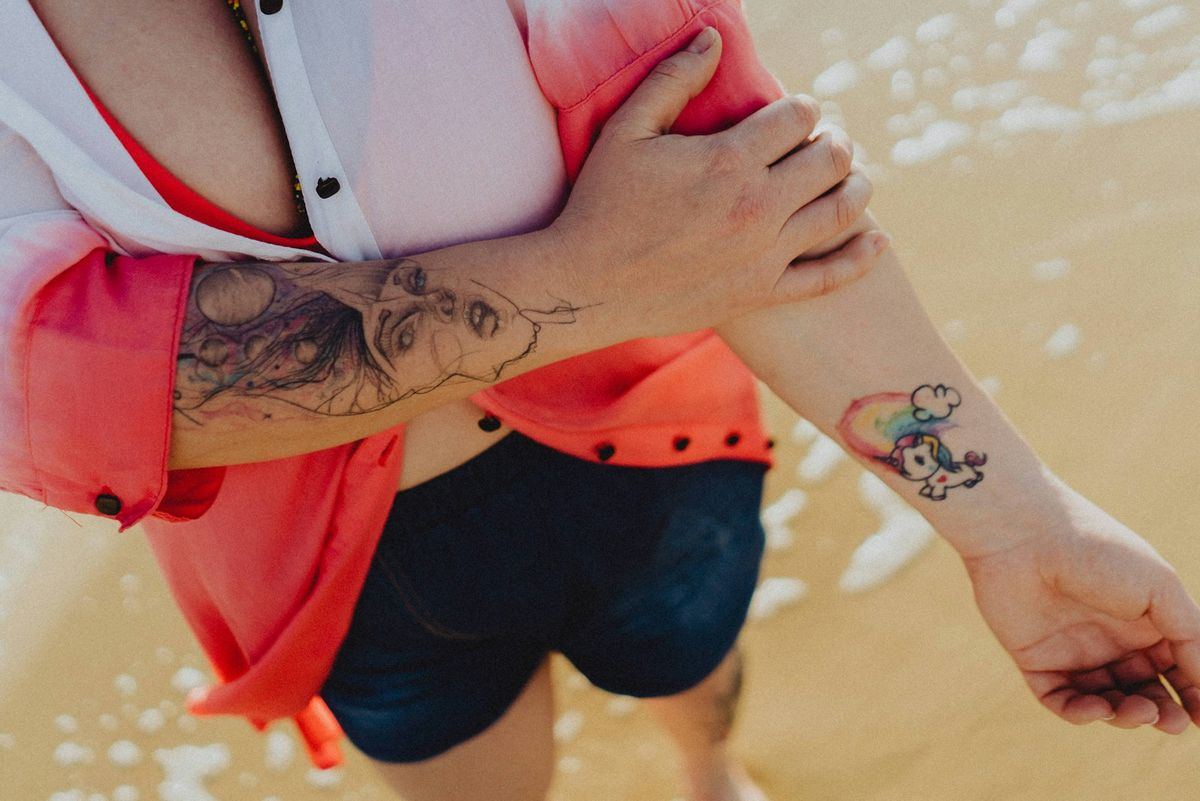
The sun is the main thing that ages a tattoo. UV rays dull the ink, fade the colours and blur the lines, in the sun and on a sunbed alike. The good news: a well-protected tattoo keeps deep blacks and bright colours for years. Which sun cream should you choose for a tattoo, when should you start applying it, and how do you use a sunbed with tattooed skin? Here’s our advice for protecting your tattoo properly.
Why the sun damages tattoos
Tattoo ink doesn’t sit on the surface of the skin: the needle deposits it in the dermis, beneath the epidermis. UVA and UVB rays don’t act in the same place: UVB rays stop mostly in the epidermis, while UVA rays reach down into the dermis, where the pigments are. Exposure after exposure, UV rays break down these pigments: that’s what makes a tattoo fade. The design pales, bright colours shift and fine lines lose their sharpness.
Sunburn makes things worse: the skin goes red, swells and then peels, and the tattoo comes out of it duller. Your tan plays a part too: the darker the skin around the design, the less contrast there is.
Not all inks react the same way. Black is the most resistant colour. Light colours (white, yellow, orange, pink, pastel shades) and delicate gradients fade much faster in the sun: they’re the ones that need the strongest protection.
When can you start putting sun cream on a tattoo?
A fresh tattoo is a wound. Until it has healed, no sun exposure, no tanning sessions and no sun cream on skin that’s still raw: cover it with loose clothing and stay in the shade. The surface usually closes up within two to four weeks, longer for a large piece. Your tattoo artist is still your best guide: they’ll tell you when the skin has healed. Throughout the healing phase, keep the tattooed area out of the sun, and only start using sun cream once the skin has closed up.
Exposing a new tattoo means risking a burn on fragile skin, poor healing and colours that won’t last. Once the skin has fully closed up, supple and free of scabs, you can go back to the sun and your sessions, with the right protection.
Tattoo sun cream: which one should you choose?
Outdoors, the best habit is a high-factor sun cream, SPF 50, on tattooed skin, even if you use a lower protection factor elsewhere on your body. A good sun cream for tattoos filters both UVA and UVB, hydrates the skin and preserves the colours.
- Apply before going out in the sun, generously, and reapply several times a day: every two hours, after every swim and after towelling dry.
- Avoid the sun at its strongest, in the middle of the day, and cover your tattoo when you can.
- Moisturise in the evening with a moisturiser or a soothing aloe vera product: well-nourished skin stays supple, and your tattoo keeps its vibrancy.
Three practical sun protection products for tattooed skin:
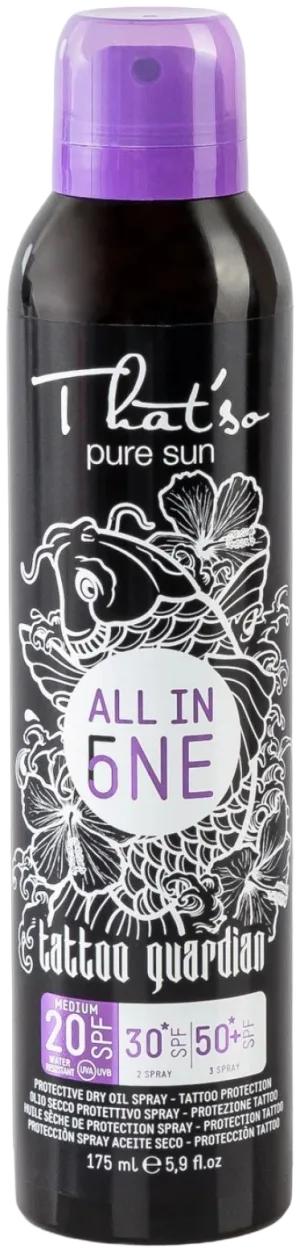
- Tattoo Guard by That’so, a spray with build-up protection: one spray gives SPF 20, two sprays SPF 30, three sprays SPF 50. It’s formulated to help prevent tattoos from fading and hydrates the skin.
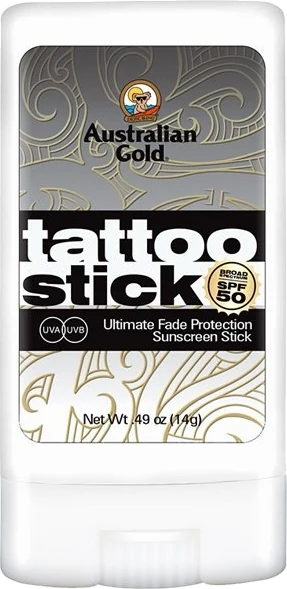
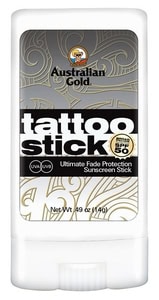
- The Australian Gold SPF 50+ tattoo sun stick, 14g, which fits in your pocket: you apply it directly and precisely to your tattoo, and bring it out again for top-ups during the day. It’s maximum protection for a small colour tattoo.
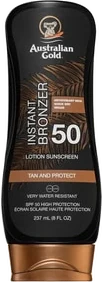
- For swimming and sport, the Australian Gold SPF 50 sun lotion with bronzers, water resistant for 80 minutes, with aloe vera and vitamin E: it protects your tattoo and the rest of your body, and you keep tanning.
How do you apply sun cream to a tattoo? On clean, dry skin, about twenty minutes before going out in the sun: a generous layer that goes a little beyond the edges of the design, then regular top-ups. The spray goes on without rubbing, and the stick is applied directly to the tattooed area.
Tattoos and sunbeds: how to tan without fading your tattoo
On a sunbed, your tattoo gets UV rays too, and a tanning accelerator contains no SPF. So here’s the method:
- Protect your tattoo with an SPF 50+ stick applied only to the design, just before your session. The rest of your body tans normally, and the ink stays protected.
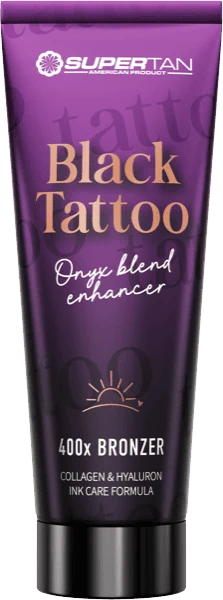
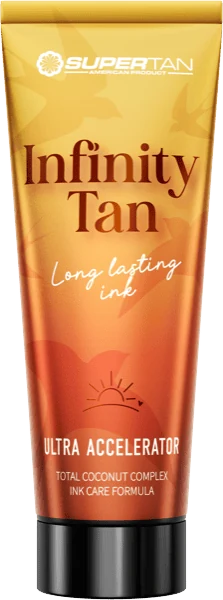
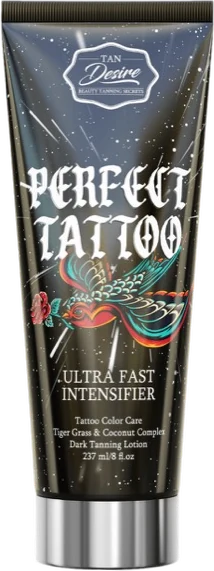
- Apply a sunbed cream for tattoos to your body. These products hydrate the skin and keep the ink vibrant: Supertan Black Tattoo, a ‘400x’ bronzer with collagen and hyaluronic acid, with its ‘ink care’ formula; Supertan Infinity Tan, an ultra accelerator with a coconut complex and a ‘long lasting ink’ formula to keep tattoos crisp; Tan Desire Perfect Tattoo, bronzer-free, with centella asiatica, panthenol and vitamin E, to keep tattoos bright and sharp.
- Stick to your session time. Always stick to the exposure time recommended by your tanning salon to avoid burning: on a tattoo, sunburn comes at a high price.
- Moisturise after your session with an after-tan moisturiser.
All these products are in our Tattoo care category:


Colour, black, fine line: which protection for which tattoo?
- Black or grey tattoos: the most resistant. A tattoo-friendly product on a sunbed and SPF 50 in the sun are enough in most cases.
- Colour tattoos: protect them every time. An SPF 50+ stick on the design at every tanning session, SPF 50 in the sun.
- Fine line, white ink, watercolour: these are the tattoos that fade fastest. Maximum protection, and keep the tattoo covered whenever possible.
Frequently asked questions
Can you use a sunbed if you have a tattoo?
Yes, once the tattoo has fully healed. Protect the design with an SPF 50+ stick and use an accelerator suitable for tattooed skin on the rest of your body.
How long should you wait after a tattoo before going in the sun?
Until it has fully healed, usually two to four weeks, longer for a large piece. Your tattoo artist will tell you when the skin has closed up.
Does sun cream damage tattoos?
Quite the opposite: on a healed tattoo, sun cream protects the ink and preserves the colours. You should only avoid it on a tattoo that’s still healing.
What should you put on a tattoo that’s been in the sun?
Before exposure, a moisturising sun protection product such as Tattoo Guard, with avocado and jojoba oils. Afterwards, a soothing, hydrating after sun, with aloe vera for example, to keep tattooed skin supple and colours vibrant.
Does a tattoo accelerator protect against UV?
They’re tanning products, not sun protection: Black Tattoo and Infinity Tan hydrate the skin and keep the ink vibrant, with no UV filter. For colour tattoos, the winning combination on a sunbed is the accelerator on your body and an SPF 50+ stick on the design.
My tattoo itches or swells in the sun: is that normal?
A new tattoo, or some coloured inks, can cause itching or slight swelling in the sun. Move the tattooed area into the shade and moisturise it. If the irritation persists or gets worse, see a dermatologist.
Why has my tattoo faded after the summer?
That’s UV light, especially if the tattoo is in colour or very fine. Your tattoo artist can bring the colours back with a touch-up; after that, protect the tattoo every time you’re exposed so it lasts.
In short
A healed tattoo copes very well with the sun and sunbeds, as long as you protect it. In the sun: SPF 50 on the tattoo, reapplied every two hours. On a sunbed: an SPF 50+ stick on the design and a tattoo accelerator on your body. You’ll find the full selection in the Tattoo care category on cremedebronzage.com.
Photo: Rachel Salles on Unsplash